


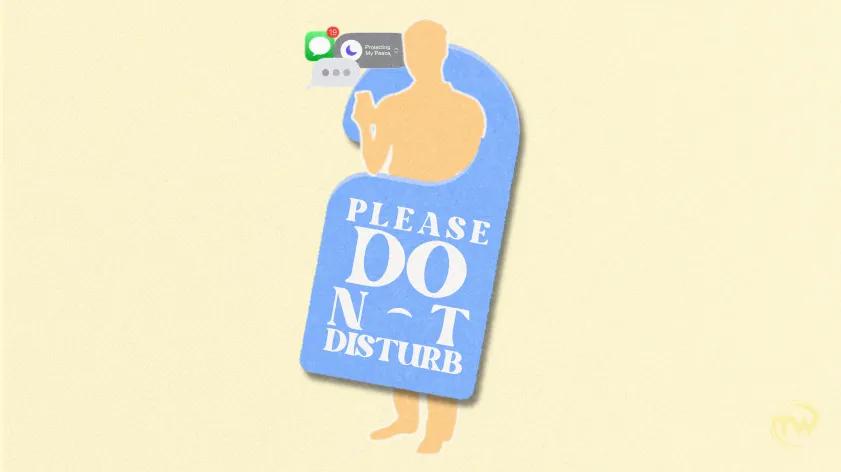
If I have a nickel for every time my friends have flaked on me, I'd have two nickels, which isn't a lot, but it's weird that it happened twice. If the heads-up text ever arrived, it's when I already have one foot out the door.
Is it a me-problem? Hopefully not. I blame modern technology instead for this flaking epidemic, for allowing us isolated satisfaction through addictive screens, feeding rising individualism, and wrapping everything in therapy-speak.
Am I guilty for doing the same? Yes.
The cult of self-obsession

(Screenshot from @absolutsilber/TikTok)
We've obsessed over self-realization, self-improvement, self-respect, self-help, self-growth, self-love, and more in the name of "self-care."
Aside from being at the function where everyone's looking down at their phones, it's the short-form video consumption that numbs us from interactions. We scroll while waiting in line, sitting through awkward silence, and while negotiating our relationships.
How many of us have scrolled through TikTok and been influenced by strangers telling us to leave when something no longer serves us, or that if they wanted to, they would? On top of that, so much content is telling us to "decenter" something, even our friends, families, and partners.
We are told to set boundaries and regulate our nervous systems in "therapy-speak," borrowed from clinical language and stripped of context online, where its looseness can be used to justify emotional avoidance.
Through therapy-speak content, we subconsciously learn to cut people off, we accept that not everyone "deserves access" to our energy, and if it feels off, it's our "intuition" speaking.
When we consume too much self-care content, our relationships become something to diagnose. The algorithm's repetitiveness only affirms our beliefs about self-preservation. We're always led to believe that we "deserve better."
I've fallen victim to these. I adapted my traits based on the new meta and psychoanalyzed my relationships on TikTok. I suddenly was a "leaver," a "go-go home girl," who, if I don't like anything, I'm leaving. Then, I became detached in my friendships, always at a distance, looking at every angle and detail.
Taking advice online makes us less willing to work through tension and less forgiving of each other's imperfections.
What's more, our phones have made us incredibly individualistic because they offer immediate satisfaction that requires little effort. We don't have to work a conversation or spend money on our commute and iced lattes just to hang out.
But it's not all too bad. Sometimes, staying home and watching movies feels like enough. I enjoy time alone because prioritizing mental wellness is important to me.
Everyone is "protecting their peace," anyway. All this is under the pretext of trying to better ourselves, but more often than not, endless scrolling consumes us to the point that we ignore someone reaching out. I know you saw that notification, but you're too sold on the idea of me-time.
What became a wake-up call was realizing that my "self-care" was costing me my relationships.
When our screens replace fun and become an escape from the inconvenience of friendships, we lose the capacity to understand that keeping our friendships going requires some sacrifices. Self-care then becomes a code for selfishness, a way to deny ourselves and our friends the memories that come simply from the effort of showing up.
The cost of guarding our hearts

(Screenshot from Giphy)
Instead of lowering cortisol through time with friends, it's replaced by the safety of our screens, small windows to a world we only half live in, traded for instant dopamine hits.
It used to matter to me to say my life was a love letter to my friends. Now I detach from people under the guise of self-care.
A guarded heart limits a life that can only feel alive through human connection. We shield ourselves with scrolling, boundaries, and constant self-preservation, yet end up feeling less present and less emotionally fulfilled.
We run away from the messiness of real relationships, the highs and lows that come with caring deeply for other people. But to be open is to allow ourselves the vulnerability of exploration, to learn empathy, compassion, and love for ourselves and others in the company of our friends.
We learn so much about who we are through each other. Besides, everything is ten times better and funnier with friends.
Being in my twenties made me realize how rare a connection really is and that adult friendships require maintenance. As much as I want to reject catch-up culture in favor of new memories together, people are busy healing, growing, and surviving, just like me.
From here on out, small pings of presence are enough. A simple check-in is enough. Sending a TikTok I thought you'd like is enough. A random photo of your lunch is enough.
I'm not calling self-care bad. I think selfishness is sometimes a virtue. But friendship is part of self-care too. I hope that when an invite comes, we mean our yes and resist treating plans as optional until the last minute. And that we sit with our reality first before taking every accusation online.
True self-care is connection.











Comments
Loading comments...
Leave a Comment