


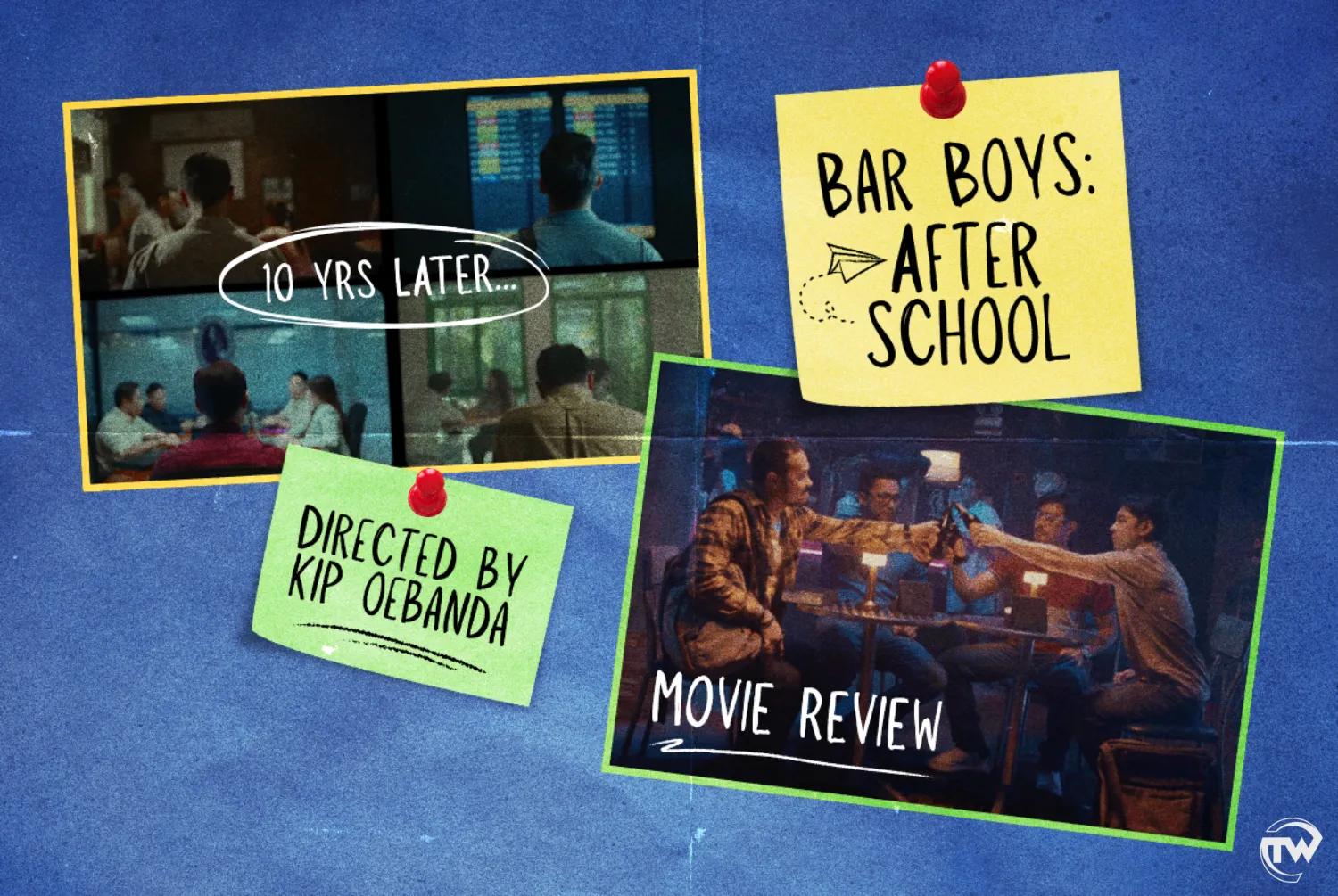
This review contains spoilers.
Dreams are rarely pursued without sacrifice, and time has a way of revealing their true cost.
Often, what we gain in ambition is measured by what we are willing to give up. Bar Boys: After School (2025), directed by Kip Oebanda, deepens the first film’s central lesson: the sacrificial nature of dreams.
Beyond a simple continuation, the sequel is keenly self-aware, offering audiences a reminder of the challenges posed by ideals, justice, and the passage of time.
Set ten years after law school, the film reunites viewers with Erik Vicencio (Carlo Aquino), Torran Garcia (Rocco Nacino), Chris Carlson (Enzo Pineda), and Josh Zuñiga (Kean Cipriano), now adults navigating the consequences of their chosen paths.
Erik serves the public's interest as a non-profit lawyer, Torran works in corporate law despite growing dissatisfaction while teaching on the side as a law professor, Chris with a seemingly successful career grapples with marital separation and child custody battles, and Josh returns to law school to pursue his long-delayed dream after repeated setbacks. As Justice Hernandez’s health declines, the four come together and agree to care for their beloved mentor.
Time reshapes their ideals, forcing each to confront the true cost of pursuing law.
Their stories intersect with a new generation of hopefuls—Arvin Asuncion (Will Ashley), CJ David (Therese Malvar), and Trisha Perez (Sassa Gurl)—they also came together to support Justice Hernandez. This convergence allows the film to explore law not merely as a profession, but as a lifelong pursuit shaped by circumstance, failure, and endurance.
Systems, struggles, and the pursuit of justice
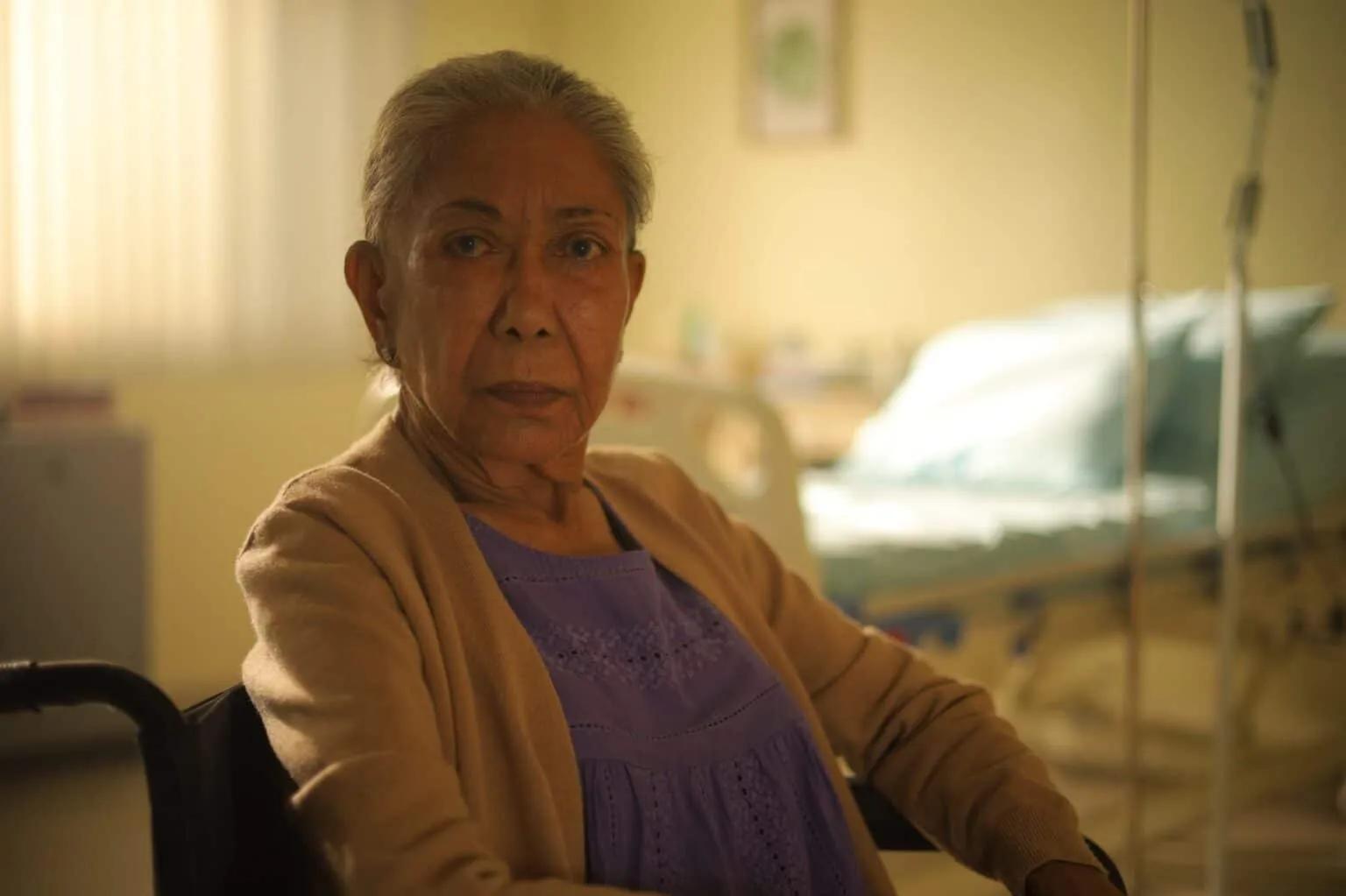
(Photo from Bar Boys/Facebook)
At its core, Bar Boys: After School is not just about individual ambition but about the systems that shape, test, and often exhaust those who choose to serve justice. Oebanda uses both returning and new characters as windows into these structures, showing how the law—while rooted in ideals—operates within unequal and deeply entrenched realities.
Erik embodies quiet perseverance under systemic pressure. His involvement begins when a labor leader from a farmers’ organization seeks his legal counsel, only to be killed soon after. In the aftermath, Erik continues the case alongside the farmers themselves, representing them in a legal fight against the Hidalgo Company—his work compensated not with fees but with eggplants and nuts. This advocacy is later weaponized against him, branded as “defending terrorists,” underscoring how easily those who defend marginalized communities are condemned by the system.
The weight of his struggles amid these circumstances is met with the wisdom of Justice Hernandez. When she warns that tying one’s worth to approval makes a person a slave, it underscores a larger truth: integrity can persist even when institutions fail. In Erik, we see the quiet courage of those who stay within the course despite a world stacked against them.
Torran confronts a different compromise. Choosing corporate stability while teaching night classes in the same halls where he once dreamed of change, he occupies an in-between stage of his inhibitions. The film offers little insight into how he arrived here, leaving room for interpretation.
He finds himself unsettled in fully pursuing teaching—a path that is familiar yet uncertain. Hernandez warns, “Missed opportunities will haunt you more than failures,” a line that sparks a subtle reckoning within Torran.
Chris, meanwhile, returns from the United States after a year-long leave as a corporate lawyer facing marital separation and custody battles. As the film progresses, Chris has a heated exchange with Erik in which he is told, “You hate your dad, but you are just like him,” as he exhibits the same insensitive traits that once defined his father. This moment echoes the first film, illustrating how Chris navigates adulthood with lingering patterns, unresolved expectations, and a sense of unfulfilled personal growth.
Josh, now in his final year of law school, embodies endurance. Despite setbacks and rehabilitation, he keeps moving forward. In one scene, he recounts a teenager charged with drug trafficking despite only possessing drugs, highlighting a legal system that pressures suspects to admit guilt in exchange for what they believe will be lighter sentences.
The new generation demonstrates that systemic pressures begin long before professional life. Arvin, balancing law school and work, distills this reality after failing the bar exam: “I could have been more if I had more.” The line cuts through the rhetoric of meritocracy; Merit alone cannot overcome structural disadvantage.
CJ confronts corruption in her community while mourning the loss of her original dream of becoming a psychologist. Her fight against a quarry contaminating the local water is mirrored in her candid reflection: “I killed my own dreams at ngayon nasa law school na ako.” Her story shows how systemic injustice can redirect lives, shaping paths that are both painful and necessary.
Against these compromises stands Trisha, confident and outspoken. Her presence emphasizes how dreams can shape personal futures and the broader world, enriching the film’s emotional and social landscape while reminding viewers that advocacy extends beyond individual ambition.
At the center of these intersecting journeys is Justice Hernandez. More than a mentor, she embodies lived justice—shaped by decades of service, compromise, and moral clarity.
“My life is not a tragedy but a triumph,” she reflects, a line that anchors the narrative.
Affectionately called “Bing,” her influence is evident every time her former students turn to her guidance—most poignantly at her funeral, when those she defended come to honor her as family. Through Hernandez, the film makes its quiet assertion that justice is not sustained by institutions alone, but by individuals who choose integrity repeatedly, even when time, systems, and circumstance conspire against it.
Time emerges as a quiet truth-teller, revealing how ideals are tested and how integrity defines legacy.
Time meets choice and growth
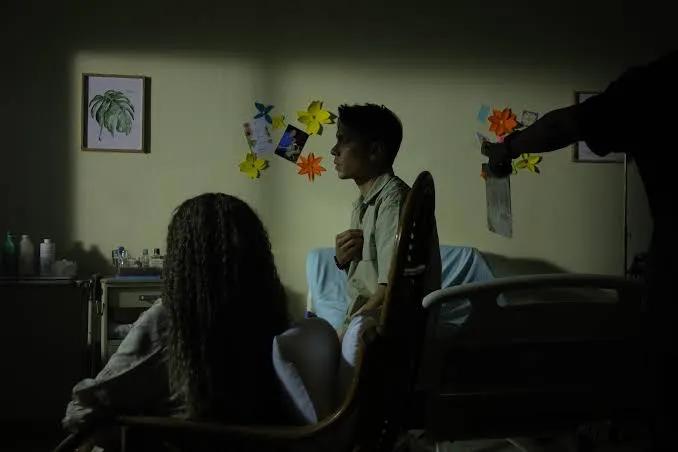
(Photo from Wence Trajano)
While the overlapping storylines may initially feel overwhelming, they ultimately converge around a unifying idea: law and life are a continuum. Arvin, Trisha, CJ, and Josh represent the journey before the profession; Erik, Torran, and Chris show the realities of practice; and Justice Hernandez embodies a lifetime of service.
Writing this review feels like a full-circle moment for me. I have written about the first film, its musical adaptation, and now the sequel. I approached this installment with hesitation, wondering what more Kip Oebanda could offer—but I was wrong. I found myself teary-eyed during Arvin’s concluding scenes, moved by how the film deepened its message on community.
Leaving the theater, I carried a renewed sense of hope for my own pursuits in life.
The story of Bar Boys does not strip away idealism by confronting reality; instead, it reads like a letter to dreamers, reminding us that despite everything, we must persist.
Bar Boys: After School is a worthy Metro Manila Film Festival entry for viewers who connected with the first film, and is still a compelling watch for those who haven’t seen it. The sequel builds on its predecessor, finding power in reflection and thematic continuity. It serves as a vivid reminder that the cost of dreams differs for everyone—financial, emotional, or familial—but the act of persevering remains universal.
Ultimately, the film lingers not in moments of victory or defeat, but in the courage to continue striving, to confront life’s crossroads with integrity, and to embrace the pursuit of something truly meaningful where dreams, justice, and the passage of time converge. - Arianna Reese Golifardo












Comments
Loading comments...
Leave a Comment