


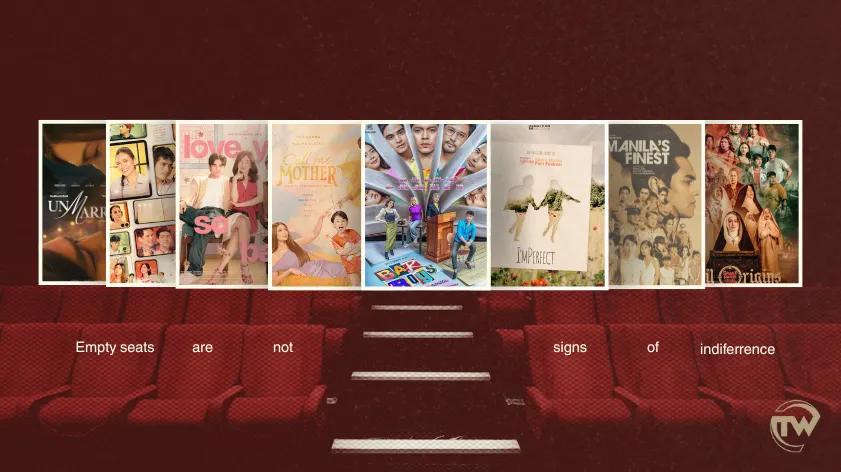
There’s now a particular pause before buying a movie ticket. It comes after the excitement, after the group chat plans, and just before the final click to purchase. It is the moment when watching a film stops being casual and starts becoming a decision.
Watching a film in the cinema used to be something many of us would do casually. We checked screening schedules, invited friends, and went without hesitation. It did not require careful budgeting about how much we would have to spend in exchange for two hours of entertainment.
Today, it feels different. Excited to catch the Metro Manila Film Festival (MMFF) films with friends, I found myself calculating how much I’d be spending for a film viewing–and the excitement began to fade.
Often, this hesitation signals that a person is not interested in the movies, but it speaks more about the growing distance between cultural appreciation and the economic reality, as cinema, once accessible, is slowly becoming selective.
The MMFF season, envisioned as a people’s festival meant to celebrate Filipino stories on the big screen, now often unfolds in front of empty seats, facing films that deserve to be seen, but not everyone can afford to watch.
Support sounds different when access costs this much
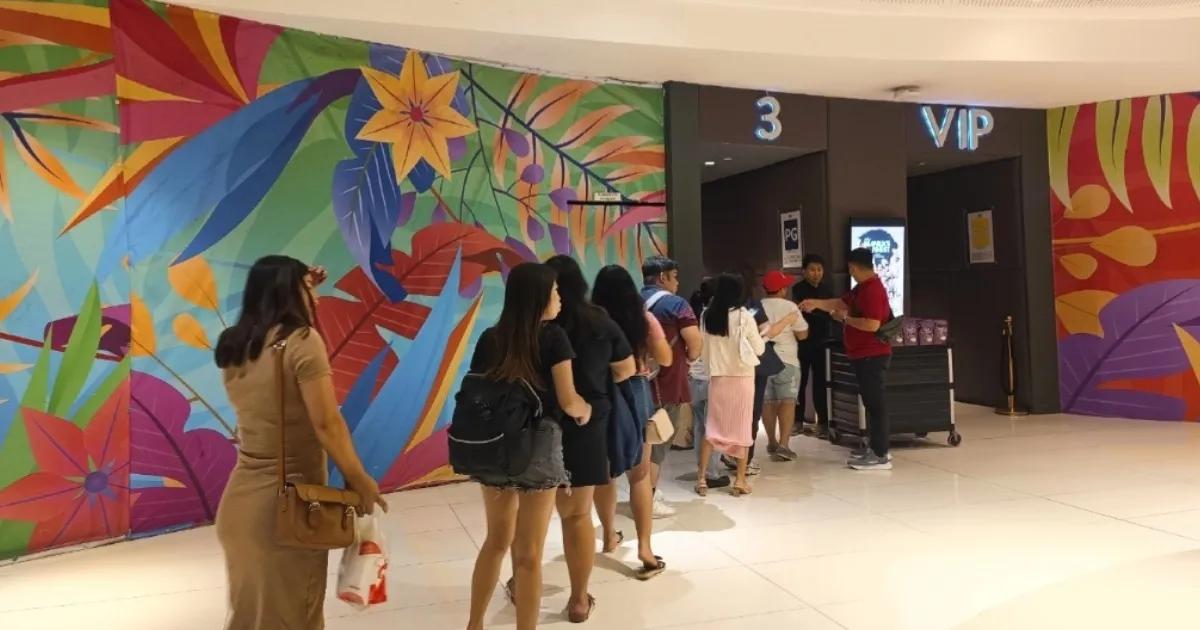
(Photo from PhilStar)
Calls to support Filipino cinema grow louder during MMFF season, but support begins to feel complicated when access itself is expensive. Screenwriter Jerry Gracio captured this frustration in a post on X (formerly Twitter), writing, “Gusto natin na bumalik ang mga Filipino sa panonood ng pelikula sa sinehan? Ibaba natin ang presyo ng sine.” His statement resonated not because it named a condition many quietly experience.
Jun Robles Lana, the director of Call Me Mother, said that ticket prices are among the major reasons for low MMFF attendance. These comments shift the conversation away from audience apathy and toward a structural problem that makes participation conditional.
Still, the issue is not one-sided. Cinema tickets are expensive, not simply because of neglect or greed but because of economics. Cinemas contend with rising rent, staffing costs, licensing fees, digital upgrades, and inflation. Returning to P100 tickets would mean confronting these realities as well. Cinema today exists between culture and commerce; it must survive financially, even as it carries cultural weight. Problems arise when economic necessity overrides access, and responsibility is placed almost entirely on audiences.
I still want to watch Filipino films in cinemas to feel the shared emotions, to hear different reactions around me, but there are times when I choose not go. It’s not because I lack interest, but because tickets are expensive and other needs take priority. Support, in those moments, becomes an internal negotiation.
Philosopher Herbert Marcuse once warned that when culture is absorbed into market logic, freedom becomes a matter of choice within limits. We are free to choose, but only among what we can afford. Cinema becomes something we are welcome to enjoy, as long as we can pay the price of entry. For those who cannot, the choice is already made; they remain outside the theater.
Cinema was never meant to be experienced alone
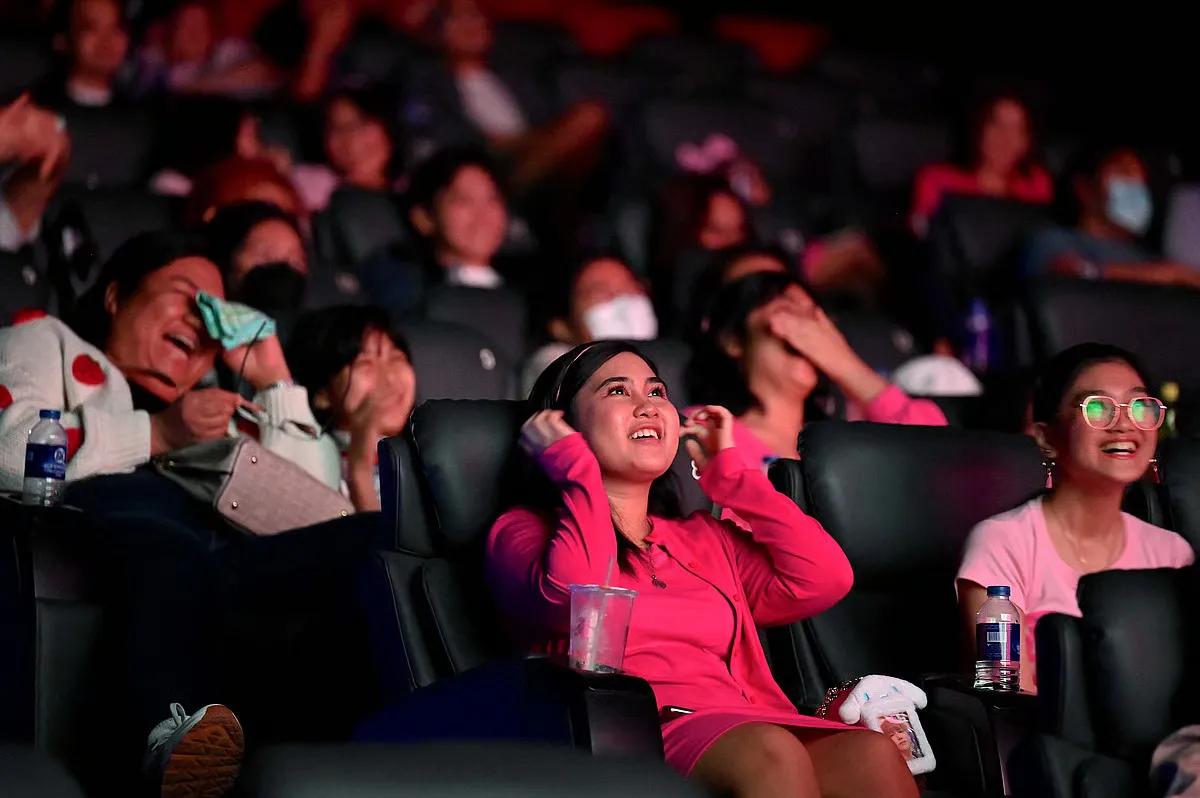
(Photo from Jam Sta Rosa/Daily Tribune)
There is something about watching a film in a room full of people. Shared laughter, collective silence, reactions we feel even without turning our heads. Cinema has always been communal.
Walter Benjamin once suggested that art gains meaning through shared experience. Film, more than many art forms, depends on that togetherness. Watching a film alone on a small screen is still watching, but it is not quite the same kind of encounter.
When ticket prices climb beyond reach, that shared space begins to thin out. People turn to streaming, clips online, pirated copies, or delayed viewing, not always because they prefer it, but because it is what remains accessible. The experience becomes fragmented, private, or postponed.
This shift is not immediately visible, but we feel it in theaters that are quieter than they should be. We notice it when scenes that were meant to land collectively pass without reaction. The absence is subtle, but it lingers.
Empty seats are not simply signs of indifference. Sometimes, they are signs of people weighing appreciation against affordability, desire against necessity. They point to audiences who want to watch but hesitate, to filmmakers who sense the gap, and to an industry caught between sustaining itself and sustaining its audience.
Filipino films deserve to be watched, but watching should not always feel this heavy.
Support for local cinema cannot rest solely on appeals to loyalty or cultural pride, especially when access itself has become uneven. When the conversation ends at “just support,” it ignores the quiet calculations people make before they even reach the cinema doors.
This is not a call to romanticize the past or to pretend that economic realities do not exist. Cinemas need to survive. Filmmakers need their work to earn, but if cinema is to remain a shared cultural space, then questions of pricing, access, and inclusion cannot be treated as secondary concerns.
Until that gap is addressed, empty seats will continue to appear not as proof that people no longer care, but as evidence of a system that asks for participation without making room for it.
In those empty seats is not disinterest, but distance waiting to be bridged.











Comments
Loading comments...
Leave a Comment