


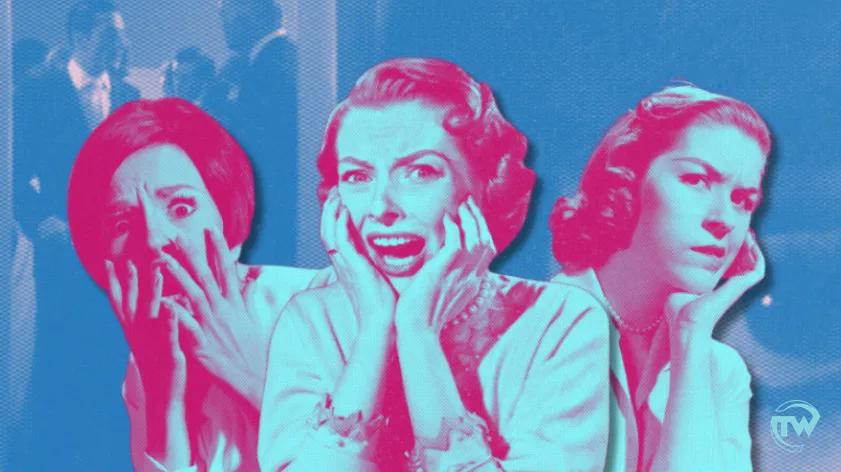
Misogyny seeps through the cracks of all that exists for those with eyes to see. It lingers in the spaces we rarely question, embedding itself in the ordinary and disguising itself as culture.
It echoes in our language when some people weaponize feminine adjectives to belittle and wound, when the words used to describe women are often synonymous with weakness, lust, or shame. It reeks in the jokes we excuse, in the insults we normalize, and in the standards we quietly uphold without question.
And yet, like dust floating in a sunlit room, we fail to notice it. We breathe it in, live within it—like shelves collecting layer upon layer of neglect—until its weight becomes part of the structure itself, unnoticed but ever-present.
The subtle always speaks volumes

(Photo from New York, New York (1977))
Violence, harassment, or overt, physical discrimination appear in the headlines when Afghan women under the Taliban rule are treated worse than animals, or when the rape of women in India has been normalized to the point that laws are placed in favor of oppressors.
Femicides continue to occur even in today's so-called "progressive" world, standing as a manifestation of misogyny. But it's also important to note that misogyny does not only operate through acts of violence. It also exists in quieter, more subtle forms—embedded in everyday overlooked attitudes, expectations, and behaviors, but no less harmful.
For instance, the language we use in everyday conversations. Casual remarks, jokes, and offhand comments that carry assumptions about what women should be, how they should behave, or what roles they are to occupy. This mindset becomes more visible when women are reduced to objects of sexual innuendos in public discourse—such as the remarks made by Congressman Bong Suntay about actress Anne Curtis, or the inappropriate question raised by Senator Jinggoy Estrada regarding American basketball player and Gilas prospect Elizabeth Means.
Even in our daily lives, subtle misogyny lingers, shaping how achievements are recognized. As a student, my success is too often met with backhanded compliments like "matalino ka pala," as if my intellect were unexpected or dependent on how I look.
Even curse words—often thrown around without much thought—frequently rely on degrading women. Many of the most common insults invoke a woman's body, sexuality, or supposed purity as a way to demean someone else. Everyday language carries these patterns, revealing how sexism runs deep in the words we speak.
How we treat women's bodies also reeks of misogyny—evident in the way they are scrutinized, commented on, and turned into public property. Much like the case of activist Natalie Geralde, whose advocacy was overshadowed when public attention fixated more on the color of her underarms than on the cause she was speaking about, or the scrutiny in the K-pop industry, where many female idols face relentless criticism about their bodies, often pushing them toward extreme dieting and unhealthy standards to meet public expectations.
Misogyny is also evident in the concept of virginity, where society ties a woman's worth to the idea of "purity." While men rarely face the same scrutiny, women are judged, shamed, or praised based on whether they conform to this expectation.
If that weren't enough, children are also subjected to subtle misogyny. From an early age, adults often teach that women must be submissive to their husbands or are destined primarily for motherhood and childcare. This lesson reinforces itself in many ways, with a subtle example being the toys they receive—dolls and playsets such as kitchen or housekeeping sets—often encourage children to internalize domestic roles as natural or desirable.
These everyday acts—whether in language, public scrutiny, or social expectations—accumulate, creating a culture where women are constantly measured, judged, and constrained.
Confronting misogyny, then, requires more than condemning extreme acts; it demands awareness of the small, persistent ways it seeps into our words, our attitudes, and the structures around us, and a willingness to speak out when it feels ordinary or invisible.
Why this conversation needs to happen
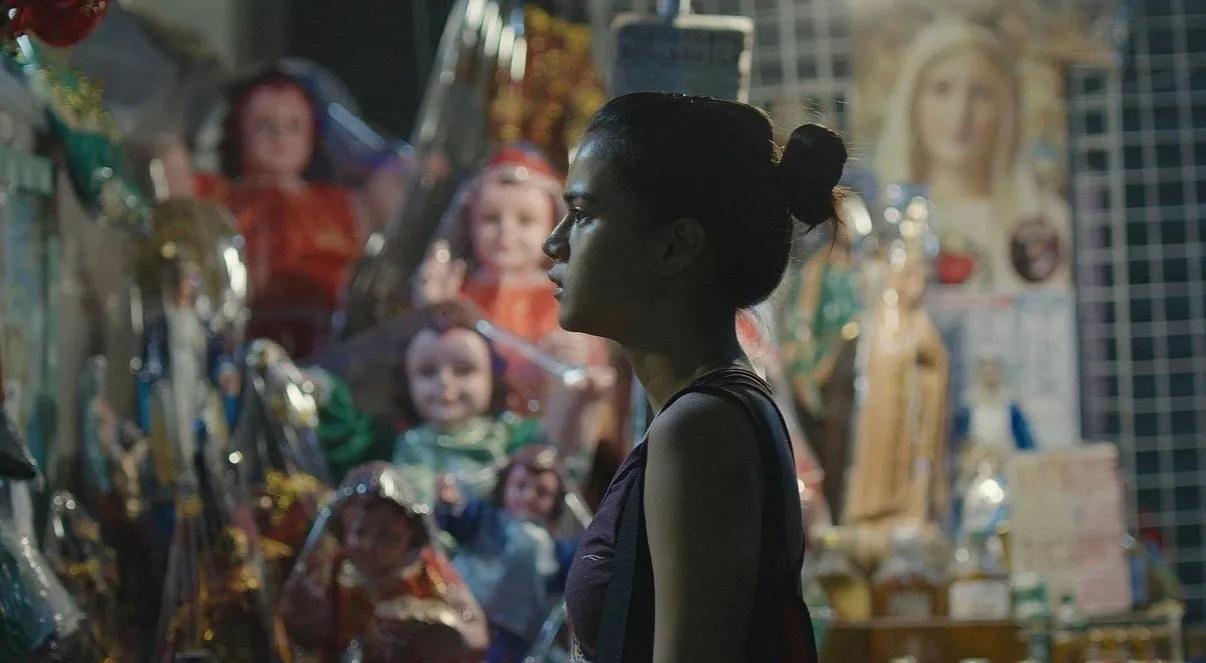
(Photo from Sunshine (2025))
Society presents a facade of a level playing field between men and women, while men maintain an unfair advantage. Despite claims that we live in a progressive world, research indicates that we are actually experiencing a decline.
Even women themselves are not immune to misogyny. From a young age, they absorb societal norms that lead them to accept and enforce gender hierarchies, often policing each other and reinforcing harmful norms without realizing it.
When society has normalized patriarchy, it's not a surprise that women develop internalized misogyny, where they unconsciously adopt the biases of a system that devalues them, judging themselves and others by standards set to limit their freedom.
You might wonder why it's even worth discussing subtle misogyny when women today have the basic rights they fought so hard to secure. But consider this: which gender is statistically more likely to experience sexual and physical harassment? Why do women in professional fields often face the impossible choice between family and career when they fall in love? And why do we still design "women-only" areas in public transportation?
If we genuinely achieve equality, they will no longer exist. Conversations about womanhood wouldn't be fraught, and laws or practices that disproportionately harm women would not still be in place.
Subtle misogyny matters because it shapes the everyday realities that make true equality far from complete.
Misogyny seeps into every corner of society, and it is up to us to confront and reshape these spaces so that equality is not just an ideal, but a lived reality.
A cause for all humanity
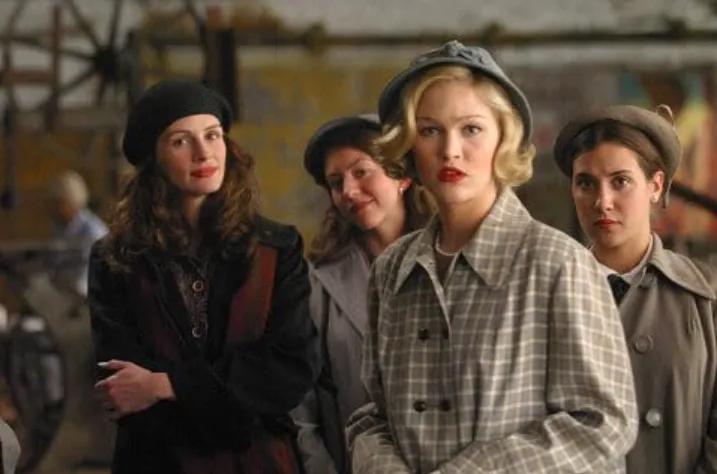
(Photo from Mona Lisa Smile (2003))
Misogyny has long existed in human societies—a cause perpetuated by patriarchal conditioning; yet historians like William Henry Scott, in his book Barangay, noted that pre-colonial communities in the Philippines often allowed women greater autonomy and had equal rights, where Babaylans and Catalonans were predominantly led by women—an equilibrium later reshaped by centuries of colonial rule under Spain and the United States.
As we celebrate women's month, we must discuss the subtle misogyny that persists in our language, culture, and everyday interactions—because true progress requires more than celebrating achievements; it demands confronting the barriers that still hold women back.
Equality requires us to speak out on public officials who make offhand comments, on our institutions that uphold laws that dehumanize women, and on individuals who belittle women. We can't achieve equality through mere praise and inclusion—it also requires the courage to confront prejudice, even when misogynistic comments slip from a loved one.
True equality will only exist when women are valued not for how they look, behave, or conform—but simply for being human.










Comments
Loading comments...
Leave a Comment