


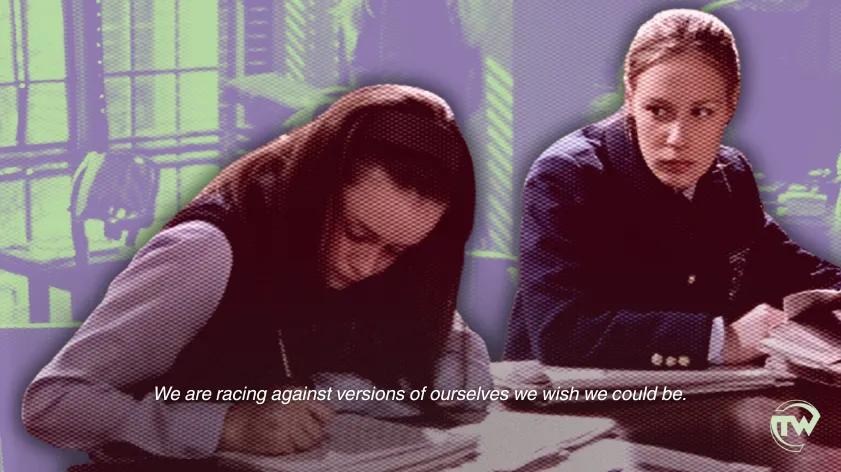
I grew up thinking I was one of the best.
It was what people told me, or so I believe. When we’re kids, we listen to what people tell us, especially those close to us. So when people told me I was the best because I was academically smart, I clung to those words like proof that I was worth something.
For a while, being the best meant acing tests, getting 99s in every subject, and collecting medals from spelling and quiz bees. It meant standing on stage while everyone clapped, graduating as class valedictorian, and continuing on as an honor student.
I thought that was how success was supposed to feel—something measured, something always acknowledged.
Despite how much other kids my age excelled in sports and things outside academics, it didn’t matter to me.
Not until the world stopped handing out stars for perfect grades, because people had already gotten used to it from me. Suddenly, there were others who were better than I was.
And without realizing it, I started keeping score again. I didn’t just want to be the best at academics anymore; I wanted to be the best at everything I did.
You can’t be the best at everything

(Screenshot from Gilmore Girls (2000))
Being the best doesn’t define you, and it’s impossible to be the best at everything.
But that’s a hard pill to swallow.
Especially in a fast-paced world, it feels like everyone is moving faster than we are: colleagues leaving the country, excelling in different areas, and landing higher positions.
Even the small things can sting. We see people waking up at 6 a.m. to maximize their day, social media peers who seem to maintain healthy lifestyles, and others who somehow manage to balance work, relationships, and hobbies without showing the moments they fall apart. All of it creates the illusion that everyone else is functioning better, and it’s easy to feel like we’re too late.
And maybe we are, but being “too late” doesn’t mean failure. Often, it only feels that way because we’re measuring our lives against others instead of our own.
I grew up in an environment where I felt like I had to succeed every time. I learned to compare myself to others early on, pitting myself against my schoolmates, seeking validation from adults who unknowingly encouraged the same cycle. I believed that being the “best” academically would make everything else fall into place.
Somewhere along the way, I became afraid of being average. I compared myself to others every day, using it as motivation to do better. But just when I thought I was good at something, there was always someone who did it better. And the chase began again.
It’s hard to let go of a competitive mindset, especially growing up in a digital age where almost every achievement, big or small, is on display. Even small things—someone going out every night, picking up a new hobby, or simply seeming happier—can trigger a quiet sense of comparison.
Social media only amplifies this culture of comparison. It shapes how we see ourselves, pushing us to stand out or fit in, to show a life that seems perfect. When we see others living effortlessly, thriving, or enjoying privileges we don’t have, comparison sneaks in.
But that’s the truth: you can’t be the best at everything. No one can have it all at once.
Even if you think you’ve reached the top, you haven’t met everyone yet, and there will always be someone better at something.
Everyone thinks that way
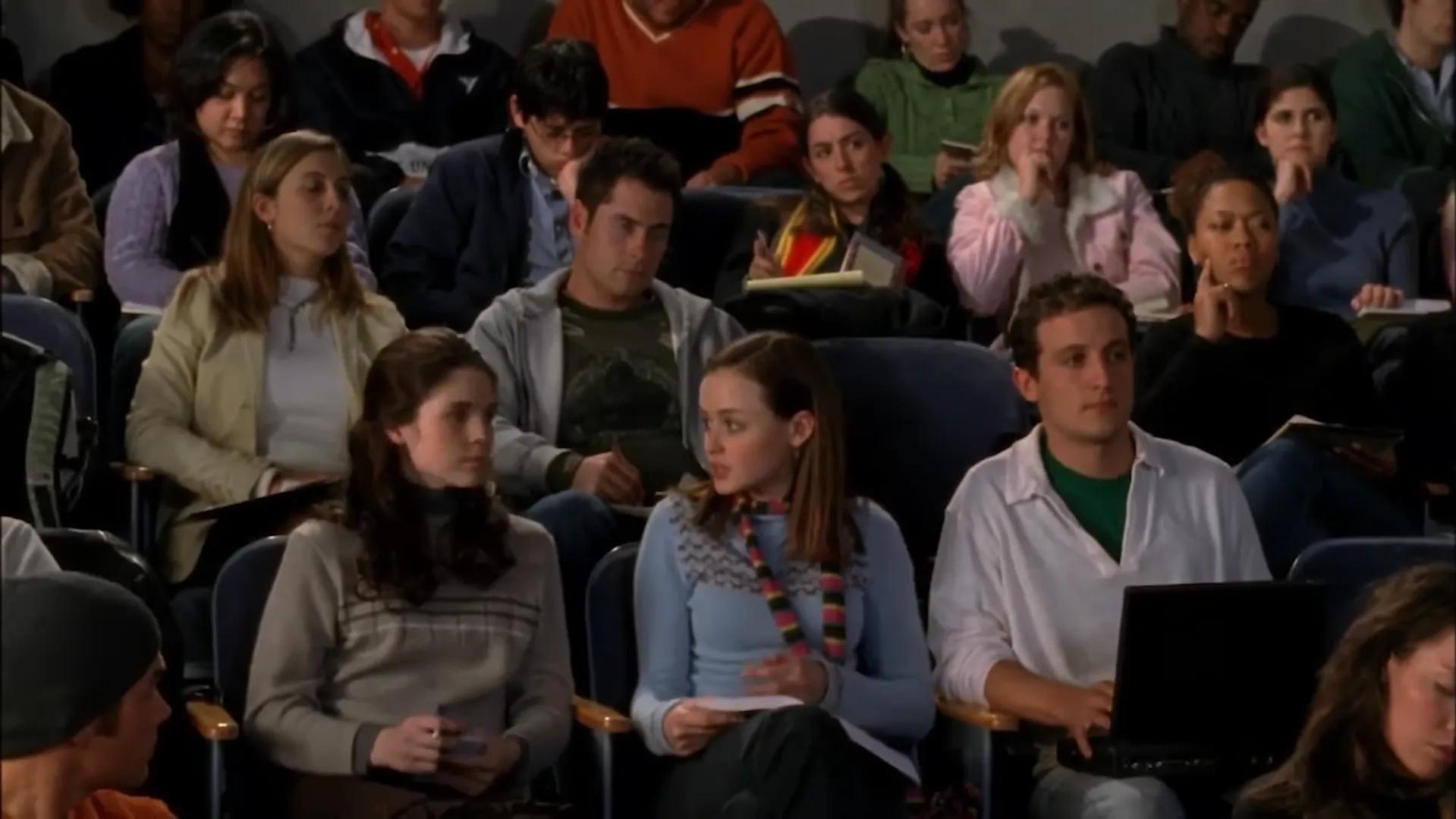
(Screenshot from Gilmore Girls (2000))
Most of the time, people aren’t competing with us—they’re competing with themselves.
For years, I thought I had to outrun everyone else to prove my worth. But the truth is, almost everyone silently measures themselves against their ideal selves.
Bitterness lingers when I think about all the days I spent comparing myself to others, striving to reach the top. When I fall short, the disappointment hits hard.
The difference now is I keep going.
I’ve learned that everyone is running a marathon with no fixed finish line. Being “behind” doesn’t mean failure anymore. We aren’t even racing against anyone else. We are racing against the versions of ourselves we wish we could be.
We compare our lives to the idealized versions we see online. We chase awards to keep up with the person we think we should be. Even when we succeed, a shadow of doubt lingers, reminding us that we could have done more.
This is why the fear of being average remains, why the desire to be the “best” never fully fades. Yet I move on even as I come to terms with the fear of being just “okay.” On days when I slip back into old habits of comparison, I choose to focus on the small personal growth I’ve made. It makes the fear easier to carry, knowing I’m still moving forward even if my progress isn’t visible to anyone else.
In the end, we are all in a competition with the perfect versions of ourselves that only exist in our minds.
Everyone thinks this way, even if they don’t admit it. We see someone as a benchmark, measuring our progress, success, and worth against theirs. And it takes a conscious effort to stop this habit and recognize that the pressure is internal.
For me, choosing a supportive circle, one not driven by competition, and accepting that I cannot be everything I want to be, has helped the comparison and competitiveness within me fade.
Little by little, I’ve come to understand that the urge to compare myself to others won’t disappear overnight, but I don’t have to let it seep into me the way it once did.
With that, I stopped keeping score.
Someone will always be better than us, but everyone probably feels the same way. In a sense, no one and everyone is winning.
Everyone is just trying not to fall behind.









Comments
Loading comments...
Leave a Comment