



April captured global attention with shifts in politics, a fluctuating economy, and other events that shaped public discourse.
Here’s a recap of headlines that defined April throughout the globe:
1. Artemis II completes historic crewed lunar mission after 53 years
(Photo from Kristina Coch/Instagram)
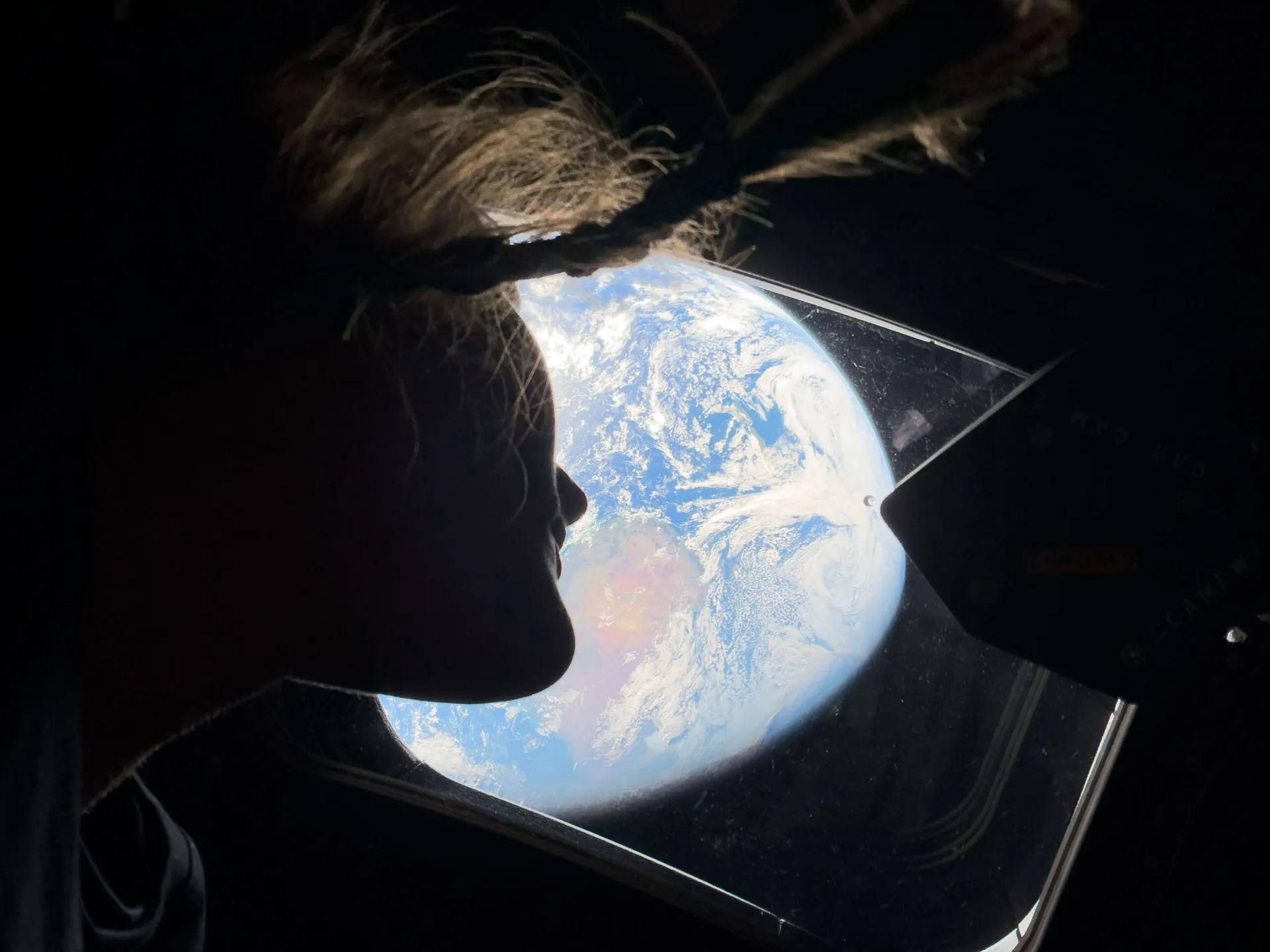
Reid Wiseman, Victor Glover, Christina Koch, and Jeremy Hansen of the Artemis II crew made history on April 1 as the first humans to journey beyond low Earth orbit since 1972.
Apollo 16 and Apollo 17 were the final two of NASA's Apollo missions, which aimed to maximize scientific gains through thorough lunar exploration. 53 years later, Artemis II aims to validate that systems and teams can safely sustain humans in deep space.
On April 6, Artemis II entered a planned 40-minute communication blackout as the Orion spacecraft passed behind the Moon, blocking radio signals to Earth. The crew used this time to conduct their observations and take photographs of the Moon's rarely seen far side.
The astronauts validated the Orion spacecraft's systems and executed a "figure-eight" free-return trajectory around the far side of the moon. They set a distance record for any human in history, traveling 252,756 miles from Earth. They also evaluated radiation protection and life support systems. On April 10, Artemis II successfully splashed down in the Pacific Ocean.
2. Coachella 2026 highlights global music milestones
(Photo by Arturo Holmes/Getty Images)
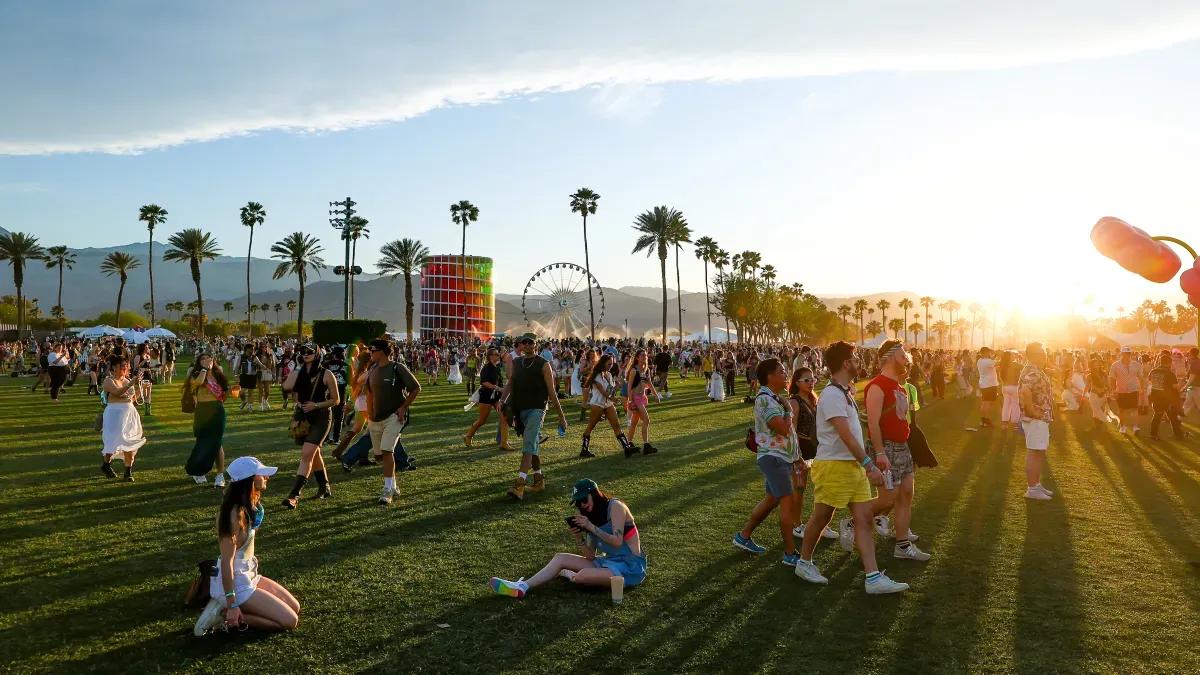
The Coachella Valley Music and Arts Festival continues to shape pop culture, drawing global attention through its highly anticipated performances and massive crowds each year. Held across two weekends from April 10-12 and 17-19.
BINI made history on April 10 as the first Filipino act to perform at Coachella. In a 45-minute set, they opened with Shagidi and delivered fan favorites like Pantropiko, Karera, and Salamin Salamin. Returning for Weekend 2 with Strings, the group closed their debut with “Mabuhay ang musikang Pilipino,” amplifying Filipino representation on a global stage.
Karol G also became the first Latina headliner of the festival. Her set featured an all-female mariachi band, highlighting Latin music and culture. Performing tracks like LATINA FOREVA, Un Gatito Le Llamó, and OKI DOKI.
Sabrina Carpenter took over the desert with her “Sabrinawood” set, fulfilling her promise from her 2024 debut to return as a headliner. In Weekend 2, she surprised audiences by bringing out Madonna for a duet of Vogue and Like a Prayer.
Justin Bieber also tapped into nostalgia with performances of Baby, Never Say Never, Sorry, and Where Are U Now. He also shared the stage with Billie Eilish for One Less Lonely Girl.
3. Middle East tensions persist
(Photo by Mohsen Ganji/AP)
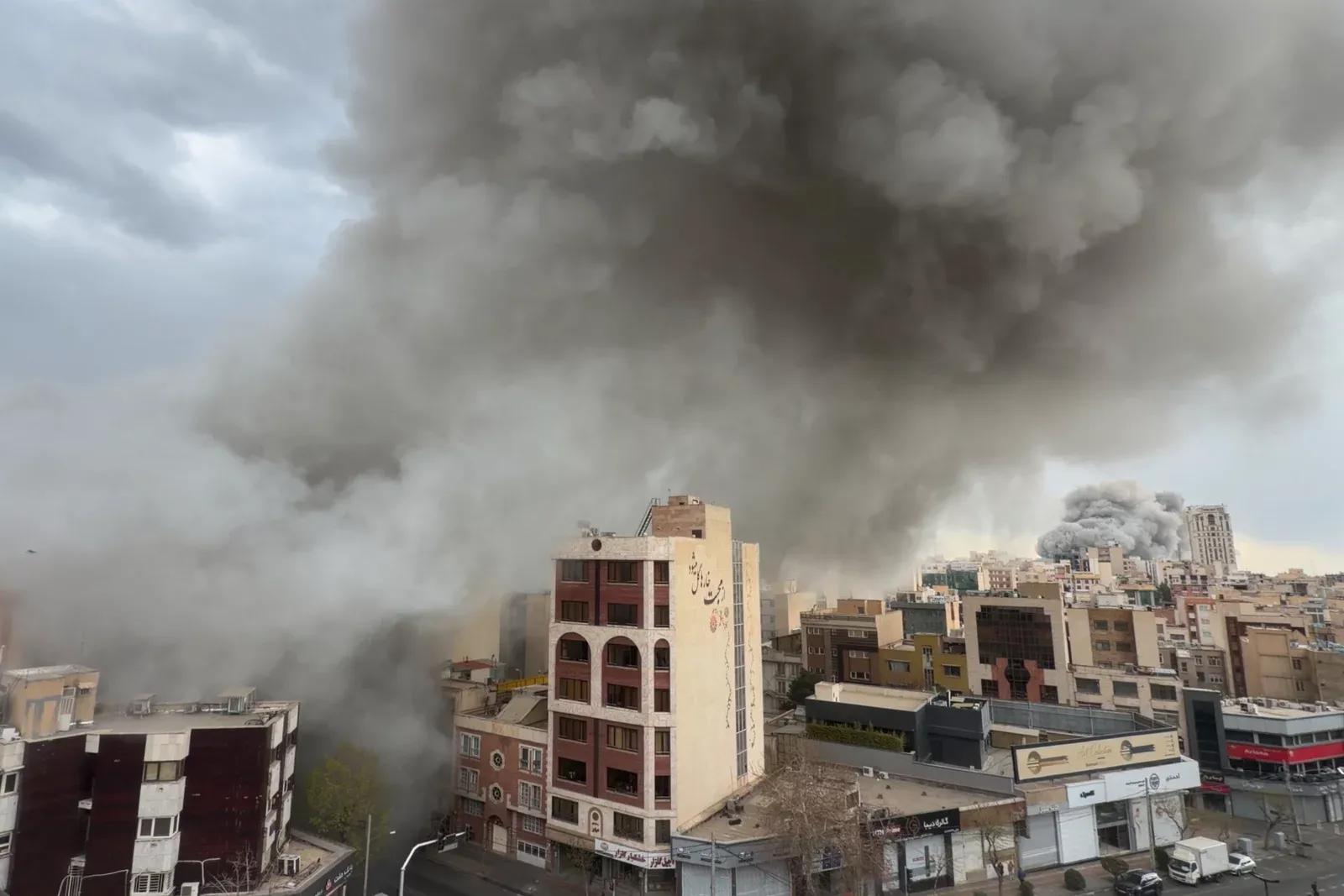
Tensions in the Middle East escalated this month as the conflict between Iran and the United States intensified, with repeated ceasefire efforts collapsing amid ongoing military actions.
In a post on Truth Social, Donald Trump wrote, “Until then, we are blasting Iran into oblivion or, as they say, back to the Stone Ages!!!,” adding he would only consider a ceasefire if the Strait of Hormuz remains “open, free, and clear.”
On April 2, U.S. forces struck the Bileghan Bridge to disrupt Iranian missile transfers. A conditional two-week ceasefire, mediated by Pakistan, was announced on April 8, with Iran agreeing to reopen the Strait of Hormuz. Trump said he accepted the proposal, stating, “I agree to suspend bombing and attacks against Iran for a period of two weeks. This will be a bilateral ceasefire.”
On April 13, the U.S. imposed a full naval blockade on Iranian ports. Iran declined to fully reopen the Strait, citing the blockade and continued Israeli strikes in Lebanon as violations of the truce’s spirit. Foreign Minister Abbas Araghchi blamed the impasse on Washington’s “maximalism” and “shifting goalposts” during talks in Pakistan.
On April 21, Trump announced an indefinite extension of the ceasefire, citing “fractured” Iranian leadership and a renewed request from Pakistan. By April 27, Iran submitted a new proposal through Pakistani mediators, offering to reopen the Strait of Hormuz in exchange for the lifting of the U.S. naval blockade and the securing of a permanent cessation of hostilities.
As of April 28, UN Secretary General António Guterres urged the protection of freedom of navigation in the Strait of Hormuz, warning that prolonged disruption could trigger a global food emergency. Meanwhile, dozens of countries at the United Nations cautioned that instability in the vital waterway continues to disrupt global trade and energy supplies.
4. Fuel volatility sparks inflation and strikes

(Photo from Rappler)
From March to April 2026, the Philippines faced fuel price volatility driven by Middle East tensions, triggering inflation spikes, transport disruptions, and nationwide strikes.
In early April, inflation rose to 4.1-percent as oil firms implemented a “big-time” fuel price hike, pushing diesel to record levels. In response, President Ferdinand “Bongbong” Marcos Jr. signed Republic Act No. 12316 on April 13, removing excise taxes on LPG and kerosene to ease household costs.
Transport group Manibela led a three-day nationwide strike from April 15 to 17, followed by a strike on April 21, calling for fuel price rollbacks, a suspension of taxes, and the repeal of the Oil Deregulation Law.
By April 27, Energy Secretary Sharon Garin announced a rollback of fuel prices, with diesel and kerosene set to decrease significantly in the coming days. Overall, the crisis highlighted how global oil shocks quickly translated into local inflation, transport unrest, and renewed calls for long-term energy reforms.
5. Holy Week travel surge tests transport capacity
(Photo from Mark Demayo/ABS CBN News)
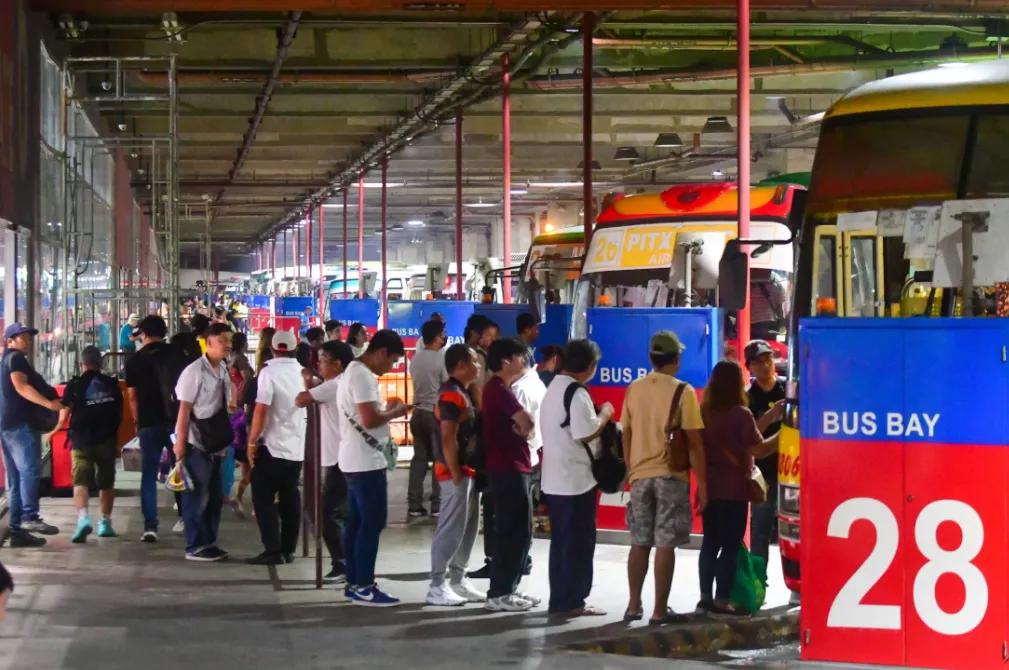
As millions of Filipinos traveled across the country for Holy Week, transport hubs, highways, and seaports saw a surge in passenger volume, prompting agencies to roll out measures to manage the travel rush.
The Metropolitan Manila Development Authority (MMDA) allowed provincial buses to pass through EDSA from 9 p.m. on April 1 until 6 a.m. on April 6, aiming to ease traffic congestion during the peak travel period.
Acting Transportation Secretary Giovanni Lopez noted a decline in private vehicles on major Luzon tollways, such as the North Luzon Expressway and Subic–Clark–Tarlac Expressway, attributing it to rising fuel costs that pushed more commuters toward public transportation.
Trips were fully booked as early as March 31 at major terminals, including Cubao and the Parañaque Integrated Terminal Exchange (PITX). However, PITX Corporate Affairs and Government Relations Head Jason Salvador said the surge also drew complaints from passengers over fare increases imposed by some bus operators, with hikes ranging from P100 to P200.
The Philippine Coast Guard (PCG) flagged routes in Cebu, Iloilo, Aklan, Batangas, and Oriental Mindoro for heavy passenger traffic due to their closeness to major tourist destinations. Across 354 seaports, Easter Sunday saw the highest passenger turnout, with 219,297 outbound and 189,629 inbound travelers, as many passengers returned to Metro Manila.
6. Faculty of Engineering wins in Pautakan 2026

(Photo by Miko Cruz/Tomasinoweb)
The Faculty of Engineering brought the championship back to Ruaño after securing victory in the 46th Pautakan Intercollegiate Quiz Competition on April 8.
With the guidance of their coaches, Engr. Mark Lawrence D. Lupoy and Engr. Rhovee P. Vistan, the team, comprising Sophia Gabrielle Suarez, James Abris, Mark Francis Añasco, Kathryn Angel Cruz, Kurt Gohan Pumicpic, Maria Elyssa De La Cruz, and Thaddeus Joseph Lao, clinched the title with a remarkable total of 210 points.
With this win, the Faculty of Engineering extends its streak as four-time defending champions. The Faculty of Medicine and Surgery and the Faculty of Pharmacy placed first and second runners-up, respectively.
The Pautakan Intercollegiate Quiz Competition gathers teams and individuals from various colleges and faculties to compete across categories such as humanities, history, science, mathematics, and general knowledge.
7. Mark Lee departs NCT and SM Entertainment after a decade

(Photo from SM Entertainment)
After a decade with the group, Canadian rapper, singer, and dancer Mark Lee announced his departure from NCT and SM Entertainment on April 3.
In an official statement, SM Entertainment confirmed that the decision followed extensive discussions regarding the direction of his future activities, with both parties reaching a mutual agreement to conclude his exclusive contract on April 8.
Mark addressed fans through an Instagram post, expressing gratitude to those who have supported him throughout the years. “I truly believe that our hearts have better sight than our eyes, and what my heart sees right isn’t a closing door but rather an opening new one,” he wrote.
Mark first debuted in NCT U on April 9, 2016, before becoming a prominent member of multiple units, including NCT 127 and NCT Dream. His contract officially ended on April 8.
8. Zaldy Co’s whereabouts remain unclear
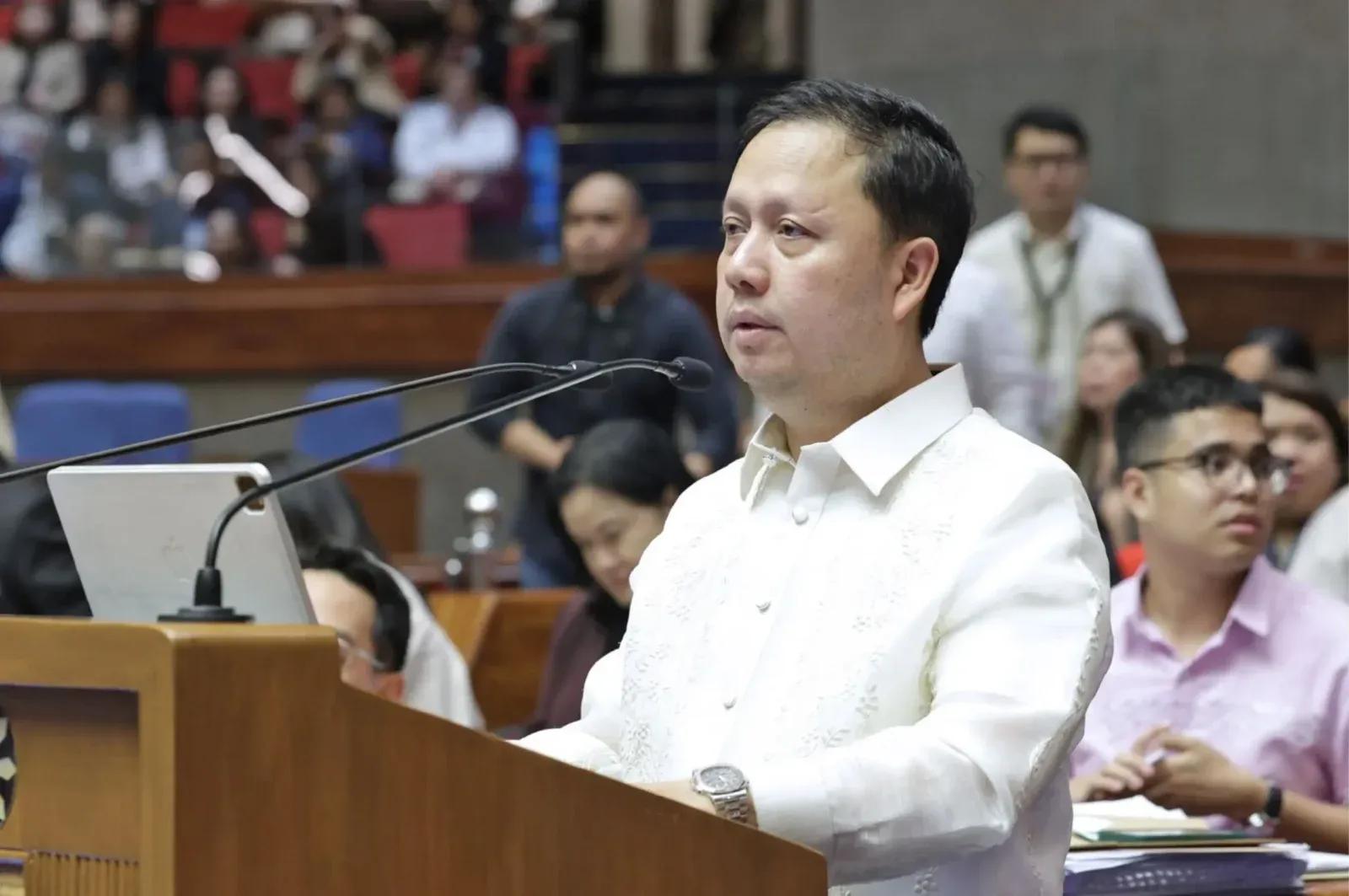
(Photo from House of Representatives of the Philippines/Facebook)
Uncertainty continues to surround Zaldy Co's status, complicating coordination between Philippine officials and European authorities as differing accounts of his whereabouts emerge.
On April 16, President Ferdinand “Bongbong” Marcos Jr. announced on social media that Co had been detained in Prague after entering the Czech Republic without proper documentation and was under the custody of local authorities.
The following day, April 17, Marcos said Co had been stopped at the German border after being denied entry—a development later confirmed by Interior Secretary Jonvic Remulla, who emphasized that Co was without a passport.
By April 27, Acting Justice Secretary Fredderick Vida said in a press briefing that Co was no longer in Czech custody. “Czech authorities have informed us that Mr. Zaldy Co is no longer in their custody,” Vida told reporters shortly after meeting with Czech officials.
Philippine authorities were not given details on Co’s exit point or when he left the country. Vida said only that Co remains somewhere within the Schengen area, noting that data privacy rules and regional protocols limit access to more specific information.
Despite lacking a passport, Co reportedly was able to cross land borders within the region.
9. ICC’s confirmation of charges against Rodrigo Duterte
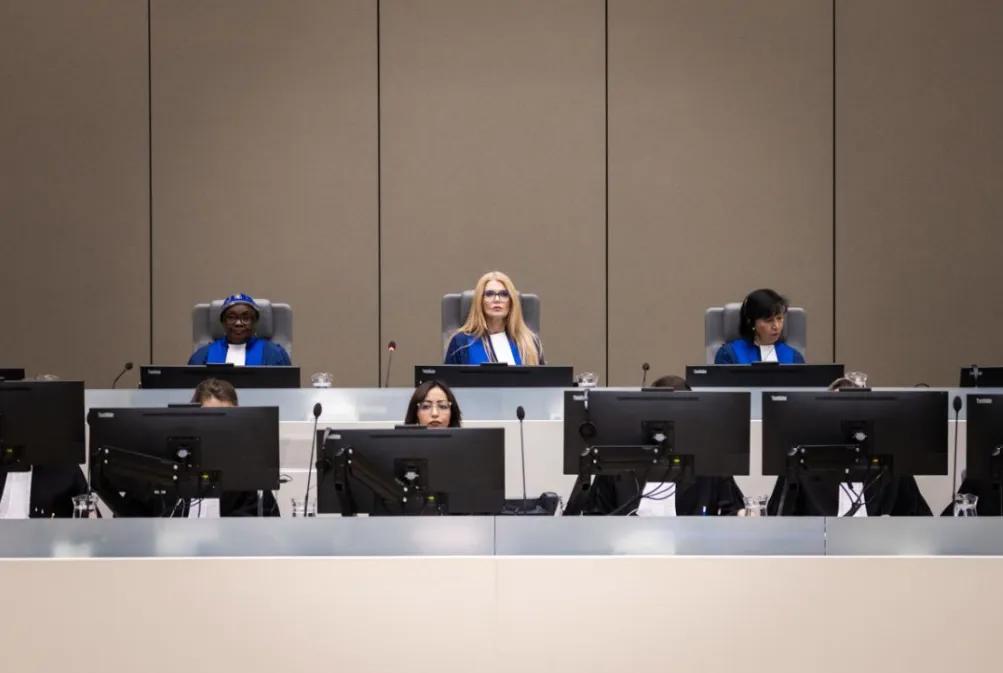
(Photo from ICC)
The International Criminal Court (ICC) Pre-Trial Chamber I unanimously confirmed charges against former Philippine President Rodrigo Duterte on April 23, allowing him to be prosecuted for three counts of crimes against humanity—murder and attempted murder—linked to his “war on drugs.”
The decision follows the confirmation of charges hearing held from Feb. 23 to 27, during which both the prosecution and the defense presented their arguments, alongside submissions from participating victims.
Under ICC procedure, confirmation of charges means judges found “substantial grounds to believe” the accused committed the alleged crimes. With this, the case moves to the Trial Chamber, which will oversee the proceedings and set timelines for evidence disclosure and case preparation.
Both parties may request permission to appeal the decision, though such requests are not automatically granted. Duterte’s lead counsel, Nicholas Kaufman, has signaled intent to appeal, criticizing the ruling for lacking detailed evidence and relying on what he described as uncorroborated witness statements.
10. Outcome of UST Halalan 2026
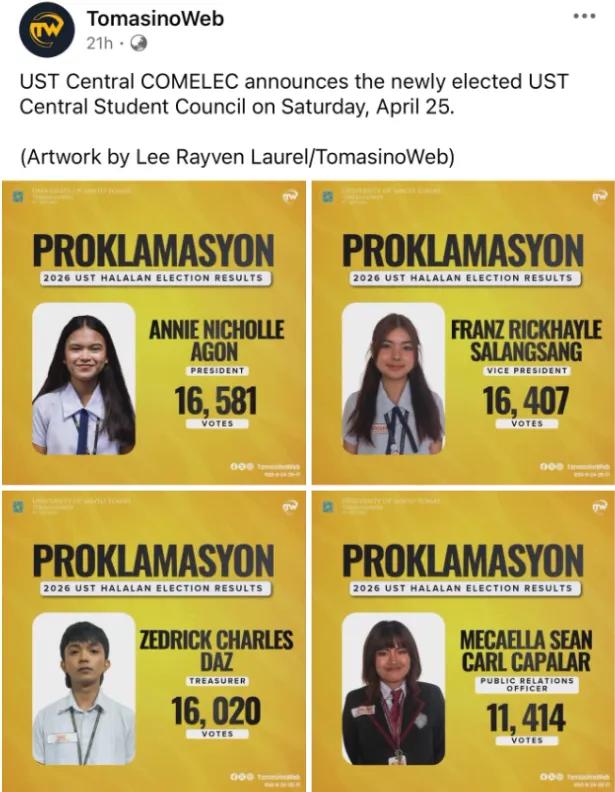
(Screenshot from TomasinoWeb/Facebook)
The UST Halalan 2026 for local and central student councils officially concluded on April 25, with the University of Santo Tomas Central Commission on Elections releasing the results via Facebook.
For the Central Student Council, Annie Nicholle Agon secured the presidency with 16,581 votes, followed closely by Franz Rickhayle Salangsang with 16,407 votes for vice president. Meanwhile, Zedrich Charles Daz garnered 16,020 votes for treasurer, while Mecaella Sean Carl Capalar obtained 11,414 votes for public relations officer. A total of 26,356 votes were recorded for the Central Student Council.
Voter turnout for the central elections reached 60.08%. The College of Nursing recorded the highest participation at 98.12%, marking near-total engagement from its electorate, while the Conservatory of Music posted the lowest turnout at 0.44%.
April 2026 is marked by developments across politics, economy, and culture that shaped public discourse as attention turns to the unfolding events and expectations of May.











Comments
Loading comments...
Leave a Comment